How Riverfront Homes Need Special Deck Foundations
Building a deck on a riverfront property requires more than standard construction methods. The ground near rivers behaves differently—softer soil, constant moisture, and gradual erosion all affect how secure a deck will be. A foundation built for ordinary backyards simply can’t handle these conditions long-term. Riverfront decks need a foundation designed specifically for shifting terrain and consistent water exposure.
How Water Changes the Ground Beneath a Deck
Water influences soil in ways that directly impact deck stability. Instead of staying firm, the ground expands, softens, compresses, and shifts as seasons change. These movements don’t happen evenly, which means a deck foundation must be ready to handle both vertical and horizontal ground motion.
What a Riverfront Deck Foundation Must Withstand
Riverfront soil and conditions place unique demands on the structure. Below are the pressures the foundation must be built for.
Constant Moisture
High moisture levels weaken untreated wood, soften soil, and can cause posts to deteriorate sooner than expected.
Soil Movement
Silt, sand, and loose layers shift more easily, making shallow footings unreliable.
Erosion Over Time
Riverbanks slowly change shape, which can reduce the amount of supporting soil around deck posts.
Foundation Methods Designed for Riverfront Conditions
Riverfront decks rely on specialized systems because standard concrete footings are often not enough. These solutions improve stability and reduce long-term risks.
Deep Piers
These supports reach stable ground far below the loose upper soil, preventing sinking during seasonal changes.
Helical Anchors
Helical systems twist deep into the earth, giving the deck a secure hold even when the surrounding soil softens.
Elevated Post Designs
Keeping portions of the structure above moisture-heavy soil helps prevent rot and increases overall durability.
Reinforced Hardware
Moisture-resistant brackets, bolts, and connectors prevent corrosion in wet environments.
Problems Caused by Using Standard Deck Footings
If a riverfront deck is built with typical footings, several issues may develop that affect safety and structural integrity.
- Uneven settling that causes the deck to tilt
- Cracked footings from freeze-thaw expansion
- Loose railings caused by shifting support posts
- Weak points where moisture damages untreated materials
- Gaps forming between deck boards and framing due to movement
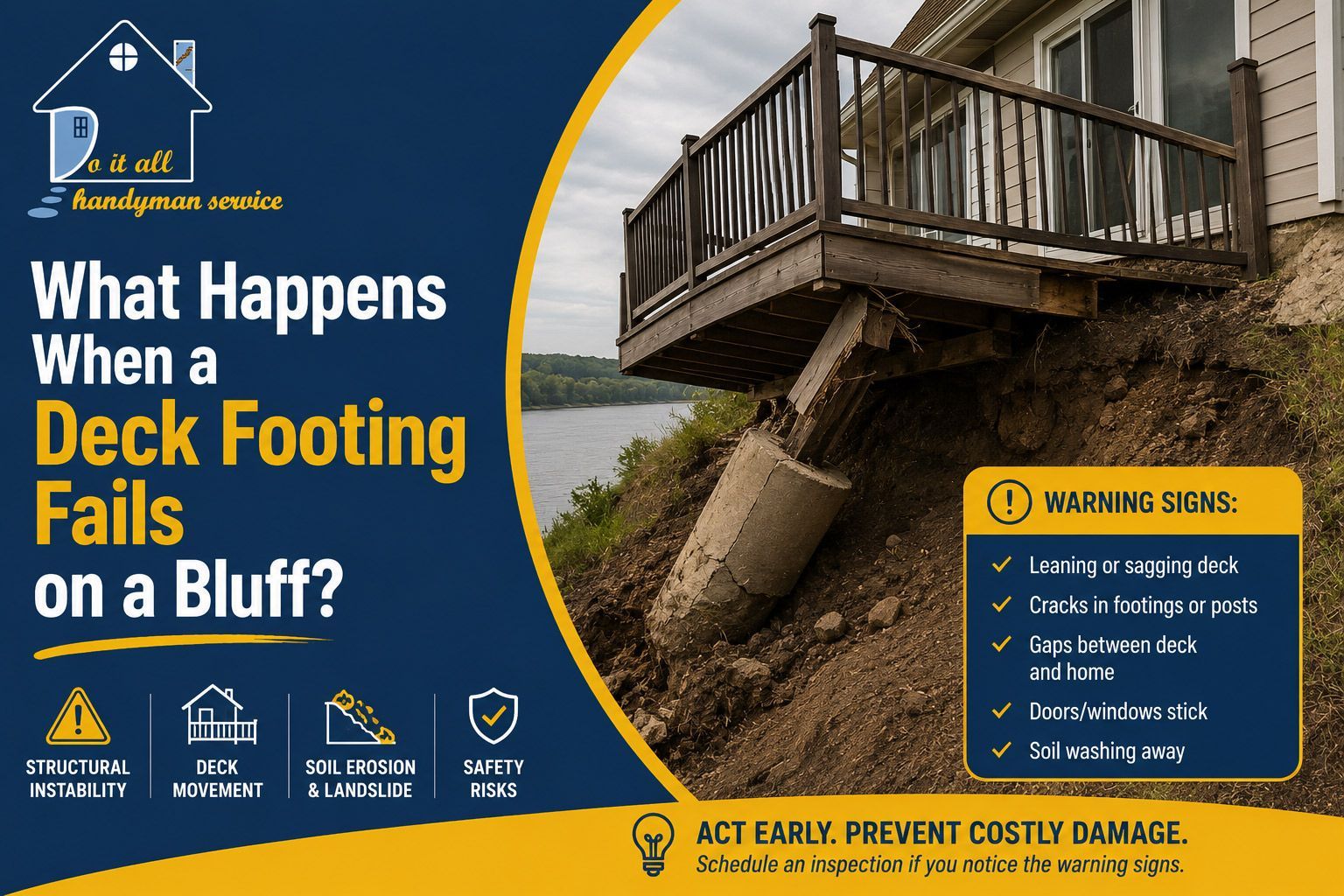
Warning Signs a Riverfront Deck Foundation Is Failing
Certain changes around or under the deck indicate that the foundation is no longer secure.
Posts Leaning or Tilting
Shifting soil can push posts out of alignment.
Movement When Walking Across the Deck
A soft or bouncy feel suggests the base is losing stability.
Cracks Around Footings
Visible cracks indicate pressure changes from soil expansion or erosion.
Repeated Railing Loosening
If railings require tightening often, the underlying support may be shifting.
Conclusion
Riverfront decks must be built on foundations engineered to handle moisture, soil movement, and long-term erosion. Using deeper supports, moisture-resistant materials, and reinforced systems ensures the deck stays safe and stable through changing seasons.
Do It All Handyman Services can assess your riverfront property and install a foundation built specifically for these demanding conditions.