
How Contractors Price Bathroom Remodels From Scratch
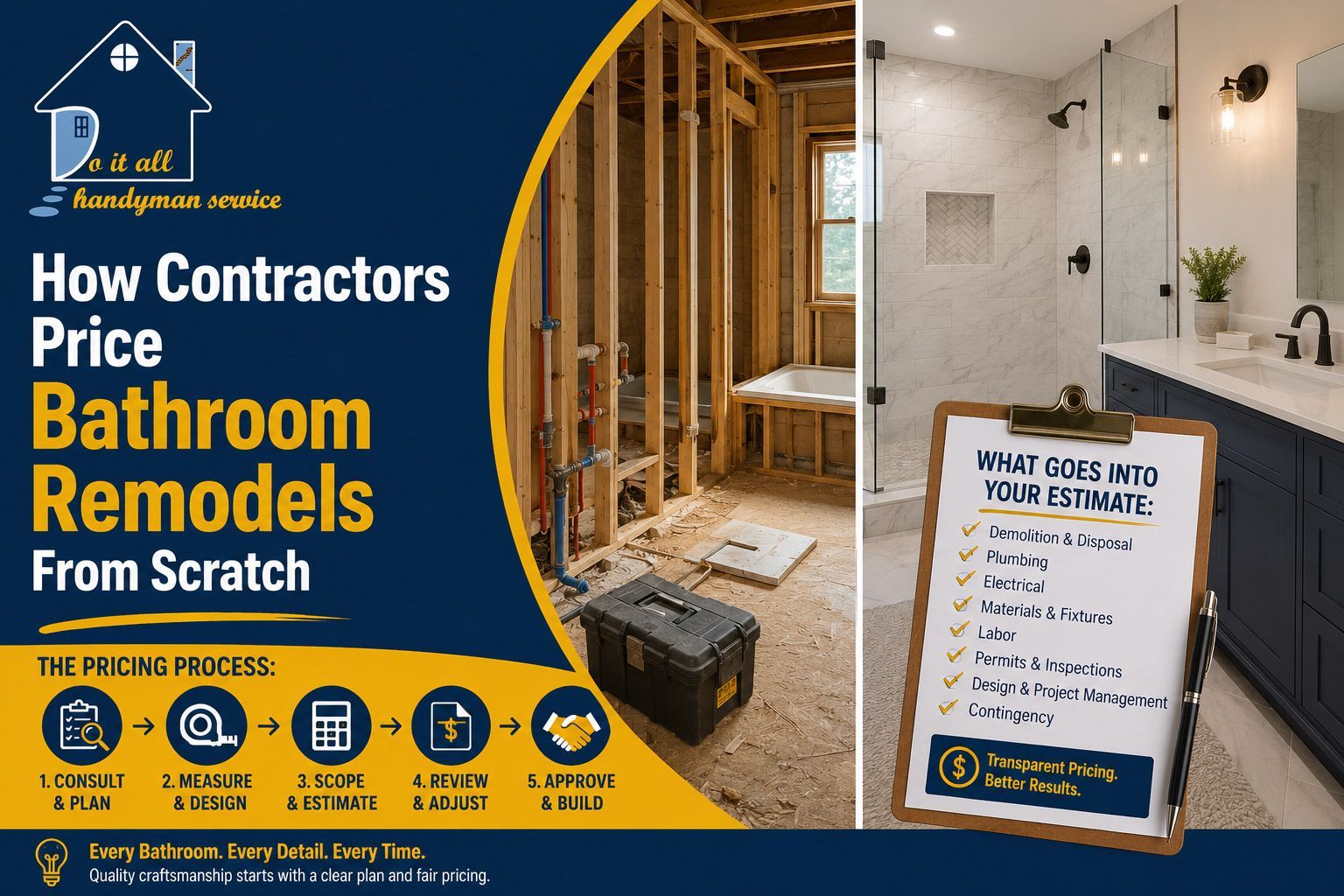
Why Bathroom Estimates Vary So Widely — and How to Read Them
Bathroom remodel pricing is among the most confusing topics in home improvement. Search online and you'll find ranges that span from five thousand dollars to fifty thousand for what appears to be the same project. That confusion is understandable, because bathroom pricing genuinely varies — not based on arbitrary markup, but based on a set of variables that most homeowners haven't thought through when they start calling contractors.
Understanding how contractors actually build their numbers gives you a concrete advantage. You can evaluate bids more accurately, catch incomplete estimates before you sign, and make deliberate choices about where to invest and where to economize. In River Falls, WI, bathroom pricing follows the same fundamental logic as anywhere else — but local labor market conditions, the age of the housing stock, and supplier access all factor into where your project lands within any given range.
Scope: The Variable That Changes Everything
Every bathroom estimate starts with a single question: what's staying and what's going? A cosmetic refresh that keeps the existing layout, plumbing rough-in locations, and tile in place is priced in a completely different tier than a gut renovation that relocates the toilet, expands the shower footprint, and changes the floor plan. When contractors say 'it depends,' they're not being evasive — scope variation produces real and dramatic price differences.
Square footage matters less than complexity. A small bathroom with a complete wet area conversion, heated floors, and custom large-format tile can cost more than a larger bathroom that keeps the same layout and uses standard finishes. Contractors price based on the work required, not the room's dimensions. When collecting estimates, make sure every contractor is pricing the same scope — otherwise the numbers aren't comparable and the cheapest bid is almost certainly the most incomplete one.
The most valuable thing you can do before calling anyone is define your priorities. Know which elements are non-negotiable and which are flexible. That clarity lets contractors give you more accurate numbers faster and makes it immediately obvious when a bid is built on different assumptions than the others.
Labor: The Trades Involved and What Each One Covers
Labor typically represents fifty to sixty percent of a bathroom remodel budget. It's also the component most homeowners find hardest to evaluate, because it involves multiple specialized trades that need to be sequenced correctly. Here's what each one covers in a full bathroom remodel.
Demolition
Demo means carefully removing the existing tile, fixtures, drywall, and flooring without damaging the surrounding structure, plumbing, or electrical. On older homes in River Falls, WI, demo sometimes reveals hidden conditions — deteriorated backer board, mold, outdated wiring — that change the scope of what follows.
Plumbing
If the layout changes, supply and drain lines need to be rerouted. Even when the layout stays the same, supply valves, drain assemblies, and fixture connections are typically replaced during a remodel. A licensed plumber handles rough-in work, sets the new fixtures, and performs any required leak-down testing before the walls close.
Electrical
Current code requires GFCI-protected outlets in bathrooms, adequate circuit capacity for exhaust fans, and proper lighting circuits. Remodels on older homes frequently require electrical upgrades to bring the space into code compliance — work that wasn't visible in the pre-demo estimate but is unavoidable once the walls open.
Tile and Waterproofing
Tile installation begins with the substrate — backer board and waterproof membrane in wet areas. The tile work itself varies significantly in labor depending on pattern complexity, grout joint size, and the number of cuts required. Large-format tile and intricate patterns take longer and cost more to install than standard field tile.
Finish Carpentry and Fixture Installation
Vanity installation, trim work, door hardware, and built-in storage elements come at the end of the project sequence. Final fixture installation — toilets, faucets, mirrors, towel bars, and accessories — rounds out the punch list before the job is handed off.
Materials: Where You Have the Most Control Over Your Budget
Material selection is the most variable part of bathroom pricing — and the area where homeowners have the most direct influence over where the project lands. Tile is the single highest-impact material decision. Not because tile is always expensive, but because the price range is extreme and installation labor varies with complexity.
Standard ceramic tile at a modest cost per square foot installs quickly and looks clean. Large-format porcelain requires precision cutting, a flatter substrate, and more careful setting technique — the material cost difference may be modest but the labor difference can be significant. Pebble mosaic and handmade artisan tile involve far more grout work and setting time than their material cost suggests. When reviewing a bid, look carefully at whether the labor allowance reflects the tile you've specified.
Fixtures follow the same logic. A toilet functions the same whether it costs three hundred dollars or three thousand. The difference is design, features, and brand. Faucets, shower systems, vanities, and lighting span an enormous price range with identical functional outcomes at very different price points. Contractors typically note in their estimates which fixtures are included and which are owner-supplied — that distinction matters when comparing bids, because a low bid built on a low fixture allowance isn't actually cheaper if you want better fixtures.
Hidden Costs That Can Move the Final Number
In River Falls, WI, where a significant portion of the housing stock predates modern building standards, bathroom remodels regularly encounter conditions behind the walls that weren't visible at estimate time. Knowing what to expect prevents sticker shock when demo day reveals something the surface didn't show.
- Mold or moisture damage to backer board, framing, or subfloor discovered during tile removal
- Outdated wiring that doesn't meet current GFCI or circuit requirements — common in homes built before the 1980s
- Cast iron drain lines that have deteriorated and need replacement before new fixtures are set
- Permit fees — required for plumbing and electrical work but frequently omitted from initial estimates
- Haul-away costs for demo debris, which some contractors include and some treat as a separate charge
- Code-required ventilation upgrades when exhaust fan capacity is insufficient for the remodeled space
A reputable contractor acknowledges these possibilities upfront and includes contingency language in the contract. An estimate that makes no mention of potential unknown conditions isn't more accurate — it's just less transparent. Ask every contractor you're interviewing how they handle discovery of unexpected conditions, and what the change-order process looks like.
Frequently Asked Questions
What's the single most effective way to keep a bathroom remodel budget under control?
Keep the plumbing where it is. Moving a toilet, shower, or vanity requires rerouting supply and drain lines — work that adds significant labor and material cost for a result most users can't distinguish from the original layout. If your current footprint functions reasonably well, designing the remodel around it is the highest-value budget decision available.
How long does a full bathroom remodel typically take from demo to finish?
A complete gut remodel on a standard bathroom runs two to four weeks in most cases, assuming no major surprises behind the walls. Projects with custom tile, specialty order fixtures, or lead-time materials can run longer. Get a realistic timeline commitment from your contractor upfront — and ask specifically how they handle delays when they occur.
Is it worth supplying my own fixtures to reduce cost?
Sometimes, but with trade-offs. Owner-supplied fixtures can reduce material costs, but they shift warranty liability to the homeowner and can complicate the project if products arrive damaged or on a delayed timeline. Some contractors also won't cover labor warranty on a fixture-related issue if the fixture itself was owner-supplied. Discuss the policy explicitly before finalizing the contract.
What items are most commonly excluded from bathroom remodel estimates?
Permit fees, demolition debris removal, mold or water damage remediation found during demo, structural repairs behind walls, and finish accessories like mirrors, towel bars, and toilet paper holders are the most commonly excluded items. Read every estimate carefully for exclusion language before signing.
How do I tell if a low bid is genuinely competitive or just incomplete?
Compare line by line, not totals. A low bid built on an unrealistically low fixture allowance, missing permit fees, or a labor figure that doesn't account for the tile complexity you've specified isn't competitive — it's incomplete. Ask each contractor to walk you through their exclusions and allowances before you make any decision based on the total number.
Conclusion
Bathroom remodel pricing is built on scope, trade coordination, material choices, and whatever conditions are waiting behind your walls. The more clearly you can define what you want before the first estimate conversation, the more accurate and comparable the bids you receive will be. Do It All Handyman Services works with homeowners across River Falls, WI to develop bathroom estimates that are detailed, honest, and grounded in what's actually in your walls — not just what's visible from the surface. If you're planning a bathroom project, reach out for a free estimate and a candid conversation about how to get the result you want within a budget that makes sense.