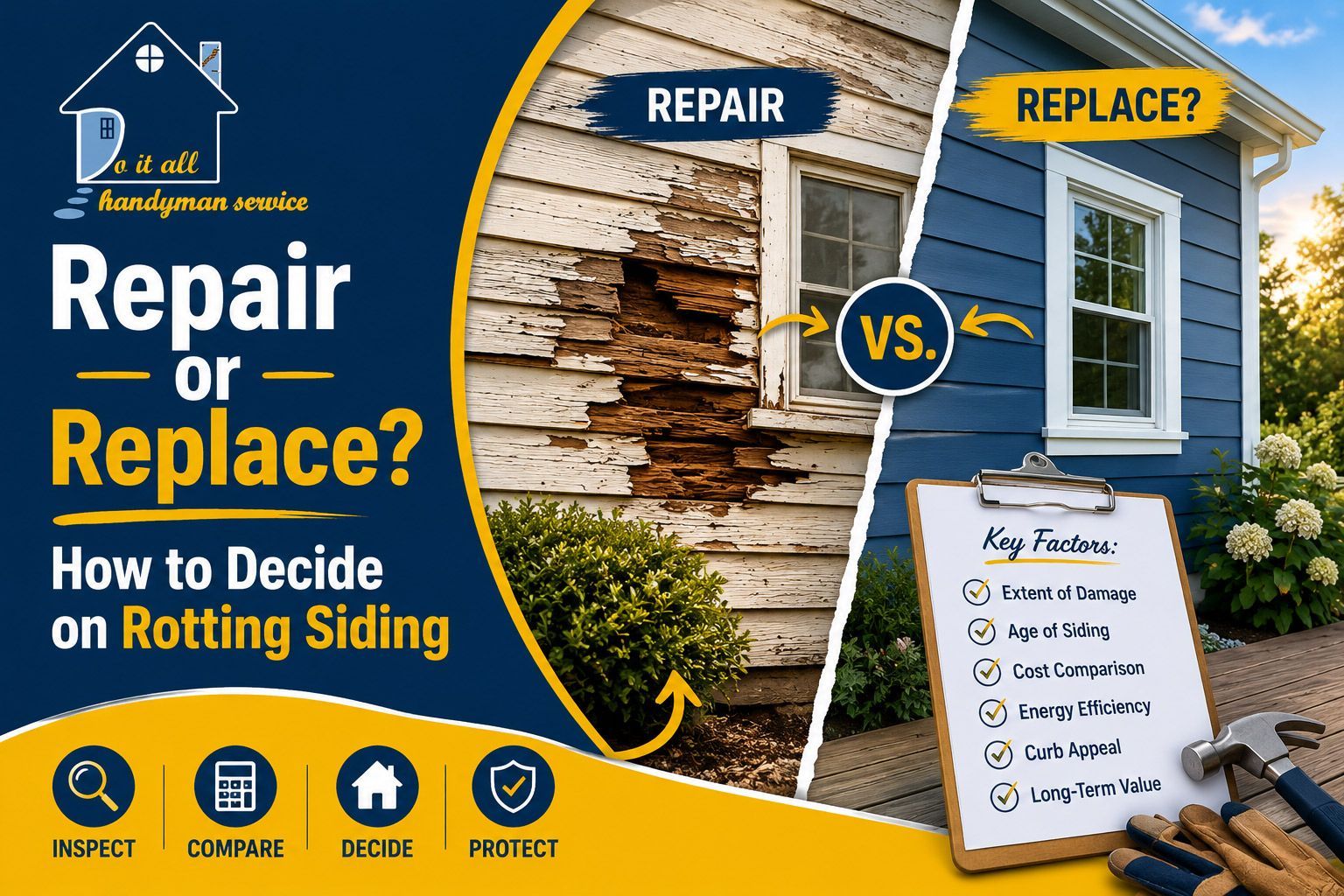
Repair or Replace? How to Decide on Rotting Siding
Why This Decision Matters More Than It Seems
Rotting siding is one of those problems homeowners prefer not to think about. A soft spot near the foundation, a few discolored boards beside a window — it's easy to tell yourself it's cosmetic and push the decision to next season. But rot doesn't stay contained. Once moisture gets behind the cladding, it works its way into the sheathing, the framing, and sometimes the insulation. What started as a few damaged boards becomes a far more expensive project with every month you wait.
The real question isn't whether to act — it's whether to repair the affected sections or replace the siding entirely. That decision depends on several specific factors, and getting it right the first time saves significant money and disruption down the road. In River Falls, WI, where homes face hard winters and wide seasonal temperature swings, siding condition directly affects how well the building envelope performs all year long. Here's how to think through the decision clearly.
How to Assess the Extent of the Damage
Before calling a contractor, it's worth doing your own initial assessment. Walking through the following steps gives you a clearer picture of what you're dealing with — and makes the contractor conversation more productive.
- Press on any boards that look soft, discolored, or swollen. Active rot loses structural integrity; boards that give way under light pressure have failed beyond surface repair.
- Check the areas most vulnerable to moisture intrusion: window and door frames, trim boards, the base of walls near grade, and any penetrations like hose bibs or dryer vents. These are where rot typically starts.
- Inspect the fascia and soffit above. Water travels downward from failing overhead elements into the siding below, so damage in one area often signals a source problem higher up.
- Look for efflorescence or staining patterns on the interior walls directly behind damaged exterior sections. Water that's already migrating inward means the sheathing has been compromised.
- Count how many separate locations on the house show damage. Isolated rot in one spot reads differently than soft boards turning up in multiple places around the building.
In River Falls, WI, homes near the water or on slopes with poor site drainage tend to show accelerated siding deterioration. When rot appears in multiple locations on a home with consistent moisture exposure, the problem is usually systemic — and replacement addresses it more completely than repeated patching.
When Repair Is the Right Call
Repair makes sense when the rot is limited in scope, the rest of the siding is in good condition, and — critically — the source of the moisture intrusion has been identified and corrected. Replacing a few boards without fixing a leaking gutter, failed caulk at a window, or grading that directs water toward the foundation just sets up the same problem to return in the same spot.
A properly executed repair can last as long as the surrounding material. The work needs to match the existing siding as closely as possible in profile and texture, and the installation must include correct flashing, sealing, and any vapor barrier material behind the new boards. A surface patch that skips the flashing and moisture barrier is a delay, not a solution.
Repair is also the right call when the siding is relatively new. If the existing material is five to eight years old and damage is limited to one section near a failed window seal or pipe penetration, there's no logical reason to replace sound material. Fix the cause, replace the affected section, and move on.
When Replacement Is the Better Investment
Several conditions point clearly toward full replacement rather than ongoing repairs. When multiple signals are present at once, the cost of continued patching typically exceeds the cost of replacement within a few years.
- Rot appears in three or more separate locations around the exterior
- The siding is original to a home built more than 25 to 30 years ago
- Matching replacement material is unavailable or the profile no longer aligns with existing boards
- Sheathing has been compromised in multiple areas behind the damaged sections
- Energy bills have risen without explanation — a sign that insulation behind the siding has absorbed moisture
- The home is approaching a sale and buyers will scrutinize exterior condition
- The existing material is wood clapboard and the homeowner wants to upgrade to a lower-maintenance product
In River Falls, WI, replacement becomes a straightforward choice when homeowners move to fiber cement or engineered wood siding. Both products outperform wood clapboard in moisture resistance, carry longer manufacturer warranties, and require significantly less maintenance — a meaningful advantage in a climate that puts real stress on exterior materials every year.
Cost Comparison: Repair vs. Replacement
Repair is always cheaper in the short term. Replacement costs more upfront but eliminates recurring damage risk and typically qualifies for a product warranty on the new material. The table below compares the two options across the factors that matter most when making this decision.
| Factor | Repair | Full Replacement |
|---|---|---|
| Upfront Cost | Lower — limited to damaged sections | Higher — full material and labor |
| Long-Term Risk | Higher if moisture source persists | Lower with correct installation |
| Material Match | May not match existing profile or color | Uniform appearance throughout |
| Product Warranty | Typically none on repaired sections | Full manufacturer warranty on new material |
| Disruption to Home | Minimal — targeted work only | Greater — full exterior project |
| Resale Impact | Limited — still shows age elsewhere | Meaningful curb appeal improvement |
Frequently Asked Questions
Can painting the repaired section hide the visual difference?
Paint reduces the contrast but rarely eliminates the difference entirely — texture and profile variations stay visible under direct light. Repair looks most consistent when the whole exterior is due for a repaint anyway, which gives you a uniform surface finish across old and new material.
How can I tell if the rot has reached my sheathing without tearing the wall open?
A contractor can remove a single board in the affected area and inspect the sheathing directly — a targeted diagnostic that takes minutes. Moisture meters can also detect elevated readings in wall cavities without demolition. If there's any question about sheathing condition, it's worth the diagnostic step before committing to a repair scope.
Does homeowners insurance cover rotting siding?
In most cases, no. Rot is classified as gradual deterioration rather than sudden damage, which is typically the threshold for a covered loss. If the rot originated from a specific covered event — an ice dam, a storm that damaged flashing — there may be grounds for a partial claim. Document the damage thoroughly and consult your insurer before any repair work begins.
What siding materials hold up best in Wisconsin's climate?
Fiber cement is the strongest performer in Wisconsin conditions. It resists moisture, doesn't rot, holds paint significantly longer than wood, and handles freeze-thaw cycling well. Engineered wood is a solid second option. Both outperform traditional wood clapboard in long-term durability and require substantially less maintenance over a typical ownership period.
How long does repair take compared to a full replacement?
A targeted repair covering two to four sections typically wraps up in one to two days. A full exterior replacement on a standard two-story home runs one to two weeks, depending on size, weather, and crew availability. Wisconsin's weather windows make scheduling flexibility important for exterior work of either scope.
Conclusion
The repair-or-replace decision on rotting siding comes down to three things: how far the damage has spread, whether the moisture source has been fixed, and whether patching makes economic sense compared to starting fresh. Small, isolated damage with a corrected source is a good candidate for repair. Widespread deterioration, aging material, or siding that can't be matched points clearly toward replacement. Do It All Handyman Services works with homeowners across River Falls, WI to make that call honestly — no pressure toward unnecessary replacement, no patch jobs that won't last. If you're seeing soft spots or discoloration, contact us for a straightforward assessment.