What's Included in a Deck Repair Estimate?
Why Reading Your Estimate Carefully Pays Off
You called a contractor, described some rotting boards and a wobbly railing, and they promised to send something over. A few days later a number shows up in your inbox — but what does it actually cover? If you've never had deck work done before, a repair estimate can feel like a black box. Knowing what belongs in a thorough estimate lets you compare bids on equal footing, ask sharper questions, and avoid the budget surprises that catch homeowners off guard once work begins.
Deck repair estimates aren't one-size-fits-all. Scope shifts based on how much damage exists, which materials are involved, and how accessible the site is. In River Falls, WI, where many homes sit on slopes or close to the riverbank, estimates often include site-access considerations that a flat-lot homeowner would never encounter. Here's a breakdown of every element a well-written estimate should cover — and why each one matters.
The On-Site Inspection: Where Every Honest Estimate Begins
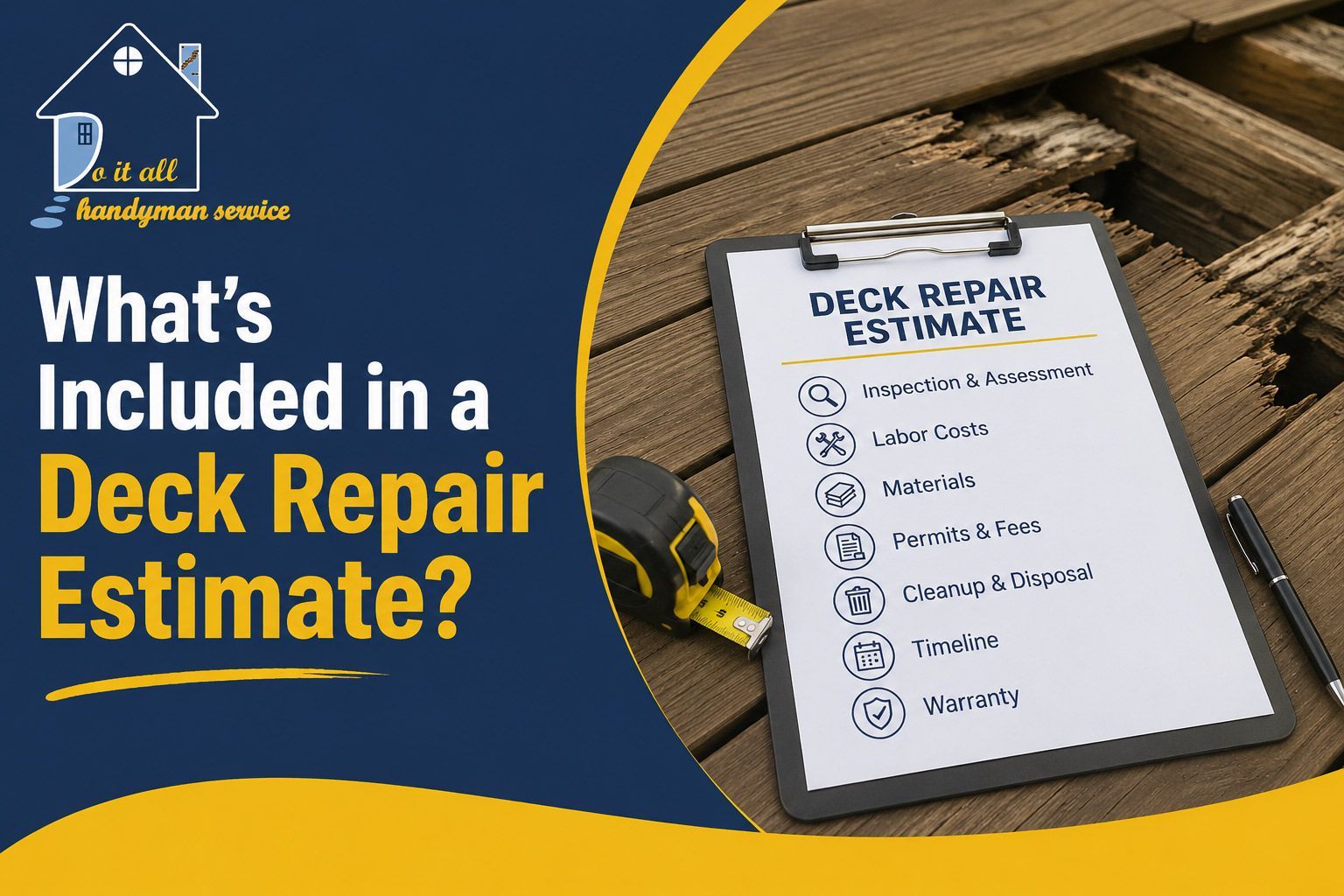
Before any number gets written down, a qualified contractor needs to physically examine the deck. A credible estimate starts with an on-site inspection — not a phone quote. During that visit, the contractor is evaluating far more than the surface boards you can see. They're checking the ledger board where the deck attaches to the house, the posts and footings underground, the joists running beneath the decking, and the hardware: bolts, joist hangers, post bases, and beam connectors.
In River Falls, WI, that process often includes looking for frost-heave damage in footings and assessing whether posts have shifted due to soil movement near the riverbank. What appears to be a cosmetic surface problem can trace directly back to a structural failure below. An estimate that doesn't start with a genuine walkthrough isn't one to trust.
The inspection findings drive everything else. Two soft boards is an entirely different project than failing joists and compromised footings. An honest contractor separates those findings clearly in the written estimate rather than collapsing everything into a single vague number.
Labor: What the Crew Time Actually Covers
Labor is typically the largest line item on a deck repair estimate and the hardest to evaluate without context. It covers far more than nailing boards — a properly itemized labor section accounts for every phase of the work from start to finish.
Demolition and Material Removal
Before new material goes in, damaged material has to come out. This includes rotted decking boards, failed railings, deteriorated posts, and any hardware that can't be reused. Demo time varies significantly depending on how extensive the damage is and how accessible the site is.
Structural Repairs
If the inspection found compromised joists, a failing ledger connection, or footings that have shifted, those repairs happen before any surface work begins. This is where costs on older decks can climb — structural repairs require the right materials, proper sequencing, and in some cases a permit inspection before they're covered up.
Installation and Finish Work
New decking, railings, stair stringers, and hardware are installed after structural repairs are complete. This phase also includes final hardware tightening, any required touch-ups to the ledger flashing, and site cleanup.
Site-Access Premium on Riverfront Properties
For bluff or riverfront properties in River Falls, WI, labor costs run higher because access is limited. Crews hand-carry lumber and hardware down steep grades that no equipment can navigate. A load of pressure-treated posts that takes thirty minutes to unload on a flat lot might take two hours to position on a bluff. A contractor who acknowledges that in the estimate is being transparent; one who ignores it is likely to request a change order mid-project.
Materials: What Grade, Species, and Fasteners Actually Mean
A deck repair estimate should clearly specify the materials being used — not just quantities. Pressure-treated lumber, composite decking, cedar, and hardwood alternatives all carry different price points and performance profiles. An estimate that says 'decking boards' without identifying species or grade leaves you guessing about what you're actually getting.
Fasteners deserve more attention than most homeowners give them. Stainless steel hardware resists corrosion and is code-required in certain waterfront applications. Standard galvanized fasteners can fail within a few seasons in the wet environment along the St. Croix River corridor. A contractor who specifies fastener type and grade is showing the kind of attention to detail that matters when your deck is expected to last twenty years.
Don't assume a lower material estimate is automatically better. Cheaper lumber grades may not perform through Wisconsin winters, and replacing deteriorating boards two years from now costs far more than using the right product the first time. The estimate is the moment to ask about material specs — before anything is ordered.
Permit Fees and Code Compliance in River Falls, WI
Depending on the repair scope, a building permit is likely required. In River Falls, WI, structural repairs — those involving footings, posts, ledger connections, or stair stringers — typically trigger permitting requirements. A complete estimate either includes permit fees as a line item or explicitly notes that they're the homeowner's responsibility. Ambiguity here is a warning sign.
The estimate should also reflect work that meets current building codes. Deck codes have evolved substantially in the last decade, and major repairs on older structures sometimes require code-driven upgrades — railing height, baluster spacing, footing depth — as a condition of the permit. Those line items aren't upsells; they're legally required improvements that protect you as the homeowner.
A contractor who skips permitting to save time is shifting that risk onto you. Unpermitted structural work discovered during a home sale or insurance claim puts the cost of bringing it into compliance squarely on the homeowner — often at the worst possible moment.
Frequently Asked Questions
How long should I expect to wait for an estimate after the initial inspection?
Most contractors deliver written estimates within three to five business days of the site visit. During busy spring and summer seasons that window can stretch. If a contractor offers a same-day number without seeing the deck, treat it as a rough ballpark — not a reliable estimate.
Should I collect multiple estimates before deciding?
Yes, and ideally from contractors who've each done an in-person inspection. Two to three bids give you a dependable price range and reveal which contractors are itemizing thoroughly versus grouping everything into vague allowances. Never choose purely on the lowest number — understand what each estimate includes and excludes first.
Can I negotiate any part of a deck repair estimate?
In some cases, yes. If you're willing to handle debris hauling yourself or purchase certain materials directly, some contractors will adjust their pricing accordingly. Any agreed-upon changes should be documented in writing as a formal amendment — a verbal agreement isn't sufficient protection once work begins.
What's the practical difference between an estimate and a fixed quote?
An estimate reflects known conditions at the time of inspection and may change if hidden damage is found during demo. A fixed quote is a binding price commitment. For deck repair, estimates are standard because what's behind rotted boards isn't always predictable. Ask upfront whether the number you're receiving is binding or subject to adjustment — and under what circumstances.
Do good contractors include maintenance recommendations in a repair estimate?
The best ones do. Notes on upcoming concerns — a joist showing early signs of moisture damage, hardware that's corroding but not yet failed — aren't upsells. They're a sign the contractor is thinking about the long-term performance of your deck, not just clearing today's punch list.
Conclusion
A deck repair estimate is worth reading line by line. The strongest ones are site-specific, clearly itemized, and upfront about what's included and what might change if conditions behind the surface are worse than expected. When you work with Do It All Handyman Services, you get an estimate built on a real inspection — one that accounts for the terrain, the materials, the labor, and the local code requirements that apply to your specific property in River Falls, WI. If you're ready for a clear-eyed picture of what your repair will actually cost, reach out for a free estimate today.